Writing

ANDMan rescues a DorkNode

· 6 min read
Ben Allfree
MeshEnvy Founder

Today ANDMan showed up in Discord and asked whether a node he had found on Spanish Benchmark belonged to us. It did. ME0002, our second DorkNode deployment, orange zip ties and all, hanging on a flagpole above the Truckee Meadows rim.

The DorkNode enclosure is an adaptation of the MSPMesh design that Imperator recommended to Dork. Backplate, hose-clamp tabs, solar integration, the whole package. On my first trip up I did not have a backplate or hose clamps in the bag. Zip ties were what I had, and they got the node on the air.

It was my first time installing any kind of node. That is the whole zero to one thing we talk about so much. Get a live repeater on a summit first. Iterate later.
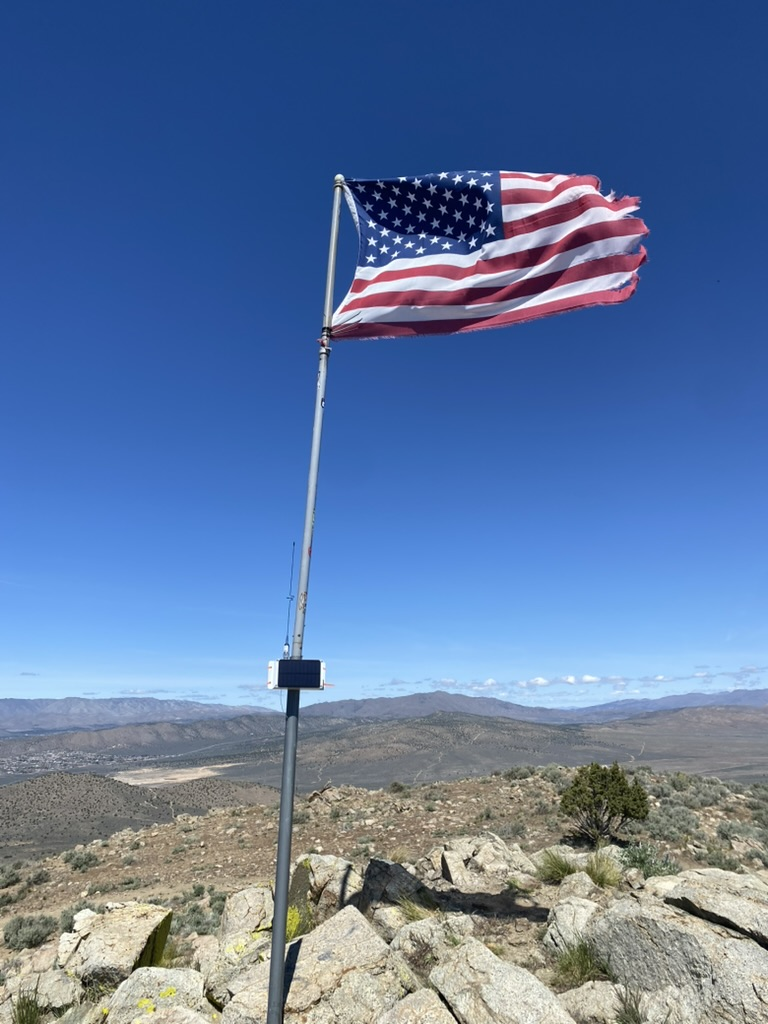
ME0002 on the Spanish Benchmark flagpole, orange zip-tie mount and tattered flag above the basin

Topaz

· 7 min read
Ben Allfree
MeshEnvy Founder

Mark Spencer lives in Coleville, down on the eastern slope of the Sierra where the mesh had never reached. We met at the Minden user-group summit about six months ago and kept in touch. His vertical antenna comparison is one of the more practical pieces on the site. In conversation he mentioned that Coleville still had no real mesh coverage and that he had once caught a brief glimpse of Meshtastic traffic, possibly from Mount Rose. That was enough for me. I offered to load up the Jeep and stake a node somewhere that could actually serve his town.

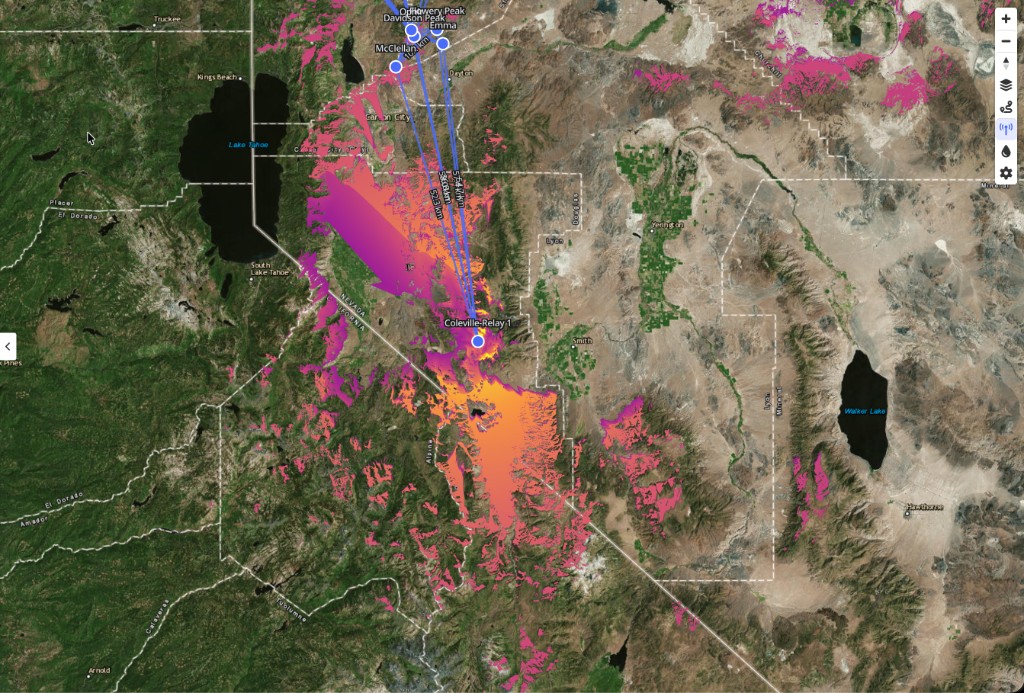
I fired up Peaky Finders and ran a goal-seeking pass toward Coleville. The algorithm pointed at Bald Mountain, a summit that already hosts ALERT wildfire cameras. From that ridge the model showed clean lines to McClellan Peak, Davidson Peak, and Flowery Peak above Virginia City. One well-placed repeater could light up Smith Valley, Coleville, Walker, and the whole Topaz Lake area. For the price of a single backbone node we could cover a basin that had been dark on our map. It felt worth a diversion from the other work on the calendar.

Peaky Finders coverage model from Bald Mountain toward McClellan, Davidson, Flowery, and Emma peaks

Silver Springs Earthquake

· 4 min read
Ben Allfree
MeshEnvy Founder

On the evening of April 13, 2026, a magnitude 5.7 earthquake struck near Silver Springs in Lyon County, about an hour east of Reno. Strong shaking rolled through Fallon, Carson City, and the Truckee Meadows. The USGS recorded more than two dozen aftershocks in the hours that followed.

While residents checked on neighbors and store aisles picked up the pieces, something else was happening on the air. The Nevada mesh network saw a sharp increase in traffic. Handheld nodes and repeaters kept passing messages through the event and its aftermath.

Poitito

· 4 min read
Ben Allfree
MeshEnvy Founder

We call it Poitito, little Poito. It sits on a rocky flank of Poito Mountain, a short walk from Dave Metts's radio compound but not on it. Ever since we placed the main Poito repeater at the tower site, I have wondered whether sitting so close to all that existing radio equipment was causing interference. I ask the same question about McClellan Peak. It is slowly becoming confirmed through empirical data that co-locating on a radio tower is not always the best option, even when the option is available. The problem comes down to ideal placement, not proximity to steel.

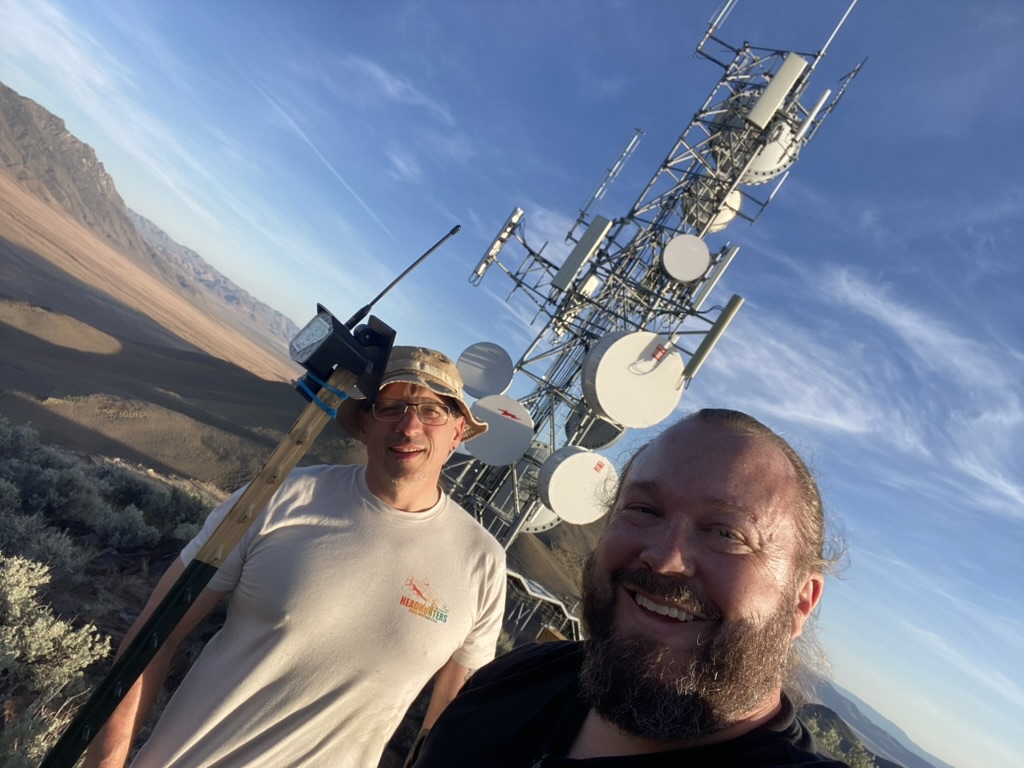
Original Poito node on a wooden mast at Dave Metts's tower compound, microwave dishes on the lattice tower behind

Vertical Antenna Comparison

· 7 min read
Mark Spencer
MeshEnvy Advisory Board

What is the best vertical antenna for a Mesh or LoRa radio?

From the beginning of my tenure with Mesh and LoRa, I have used the RAK4631/RAK19007 combination to homebrew my own hand-held and stand-alone Node devices. Since signal quality is important to LoRa, the antenna is something within my control that I can change to make the systems more effective. I found the plethora of antennas available daunting with wide ranges in advertised performance metrics and prices. I set out to determine which antenna provides the most bang for the buck.

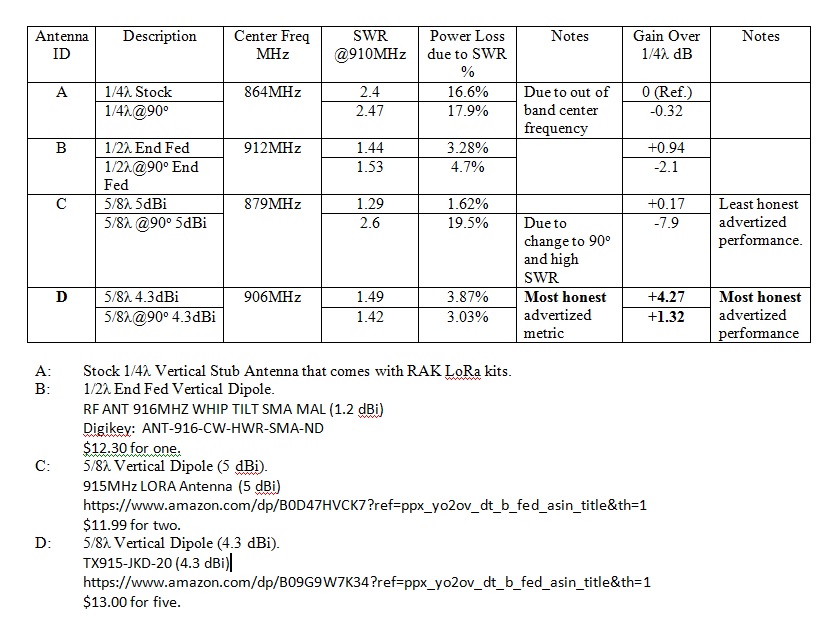
Summary: The TX915-JKD-20, available from Amazon, proved to be the best performer at the best price. Figure 1 shows the tabular summary of the antennas tested.

Summary table of vertical antenna SWR, gain, and cost test results

Antennas tested (figure 1):

Ruslito

· 4 min read
Ben Allfree
MeshEnvy Founder

When we deployed Russell Peak, Ruslito stayed behind as a soldier node. I wanted to compare two vantage points in close proximity and see which one performed better. I never meant to leave both nodes up for long. The comparison gave us useful data. Then Ruslito needed to come home.

That first Russell Peak trip I had almost no gear with me. Ruslito got the full jank treatment.

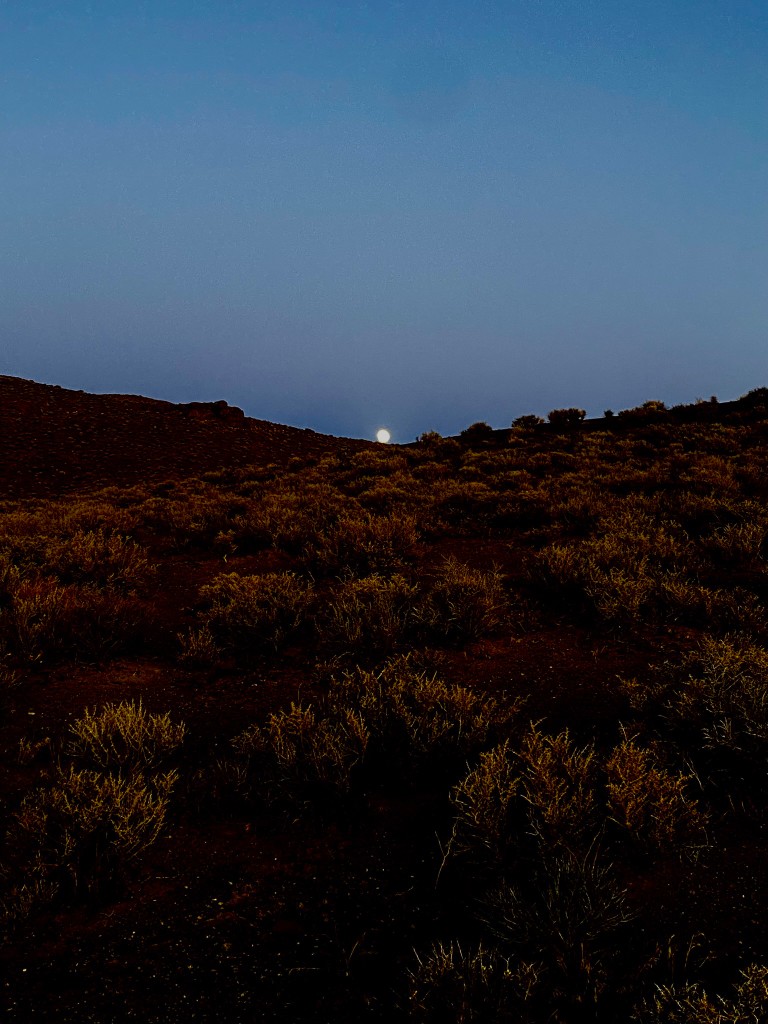
Moonrise over the desert ridge below Russell Peak, color corrected to match what I saw in the field

Fox Mountain

· 5 min read
Ben Allfree
MeshEnvy Founder

I was exhausted after several days of working the Reno backbone out to Gerlach and the Black Rock Desert, and I wanted to go home. One of my goals for the trip was a site survey on Fox Mountain: walk the summit, see what it hears, and figure out whether a repeater there is worth pursuing and where it should sit. I had been exploring around Soldier Meadows and playing around in the Jeep doing range tests out that way when onX Offroad told me I could get to Fox Mountain from where I was. It might even be true. Sometimes it sends me down the worst roads just because they are the shortest path on paper.

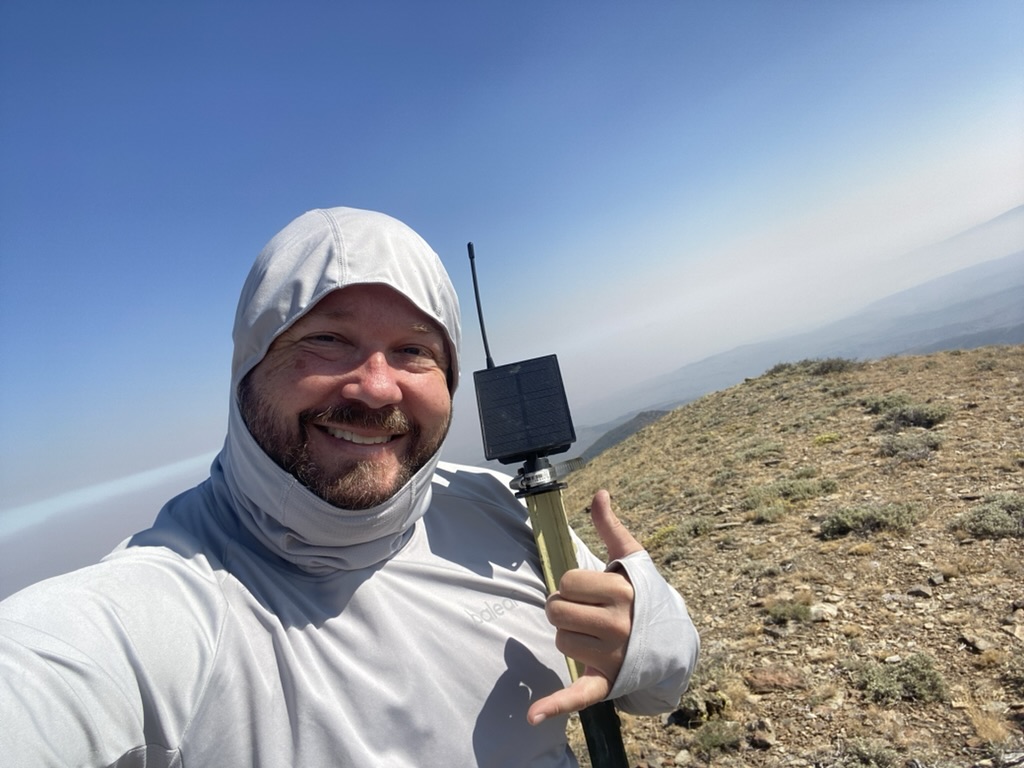
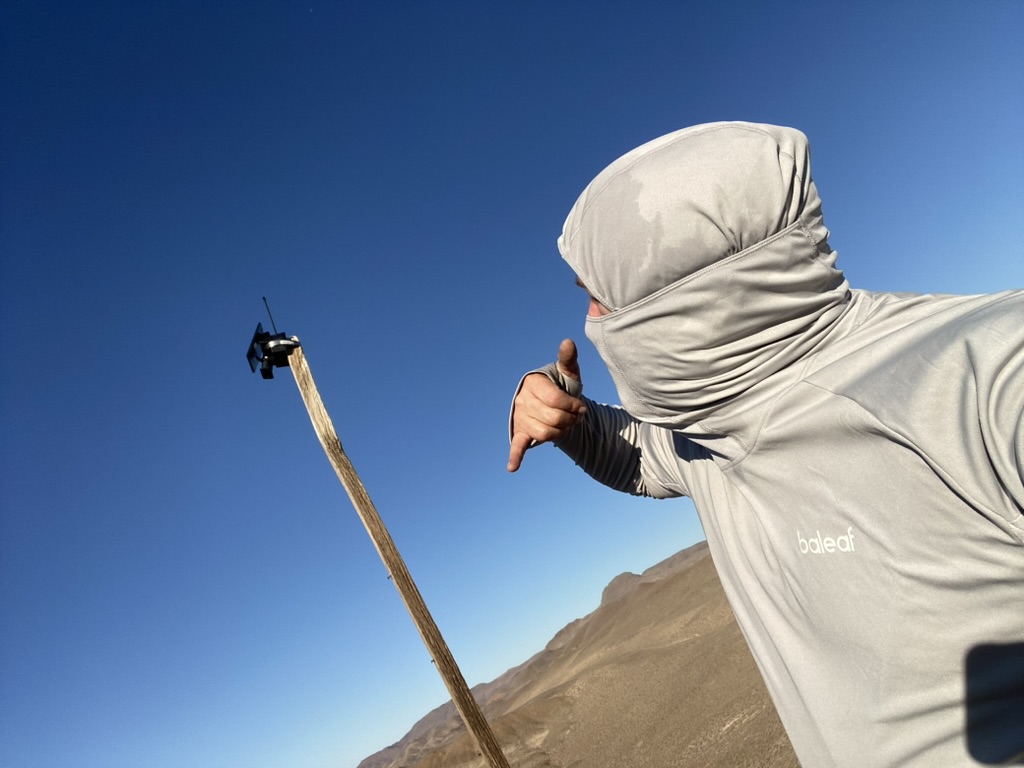
Ben holding a mesh repeater on a T-post at the Fox Mountain summit, wildfire smoke haze in the valley below

Russell Peak

· 4 min read
Ben Allfree
MeshEnvy Founder

For a long time we could not get a response from Russell Peak. I assumed the worst. Maybe a storm had ripped the node off the mast, or wind and vibration had finally finished what desert summers start. The peak sits on a lonely stretch of the backbone toward Poito Mountain and the Black Rock corridor, and when a site like that goes dark you do not get many clues from Reno.

Mesh node secured to a wooden mast on Russell Peak, desert basin in the background

Introducing EnvyOS

· 7 min read
Ben Allfree
MeshEnvy Founder

When I bought my first mesh radio, I honestly thought I would turn it on and start talking immediately. That is not what happened. I ran into settings, radio frequencies, and terminology I had never needed before. The app did not work very well either. The whole experience was sobering. If I was struggling, I could not imagine a busy parent having any luck at all.

That parent is the avatar I keep in my head. I picture a mom who drops something the size of an AirTag into her purse, opens an app on her phone, and gets help when she needs it. Flat tire, kids in the car, middle of the desert, no cellular reception. I want that to work without her needing a crash course in LoRa presets first.

I also think about the backpacking photographer who knows his trade and his camera gear cold, but not mesh networking. I want him to reach the farthest corners of Nevada, stay in touch with his group, or call for help without needing the equivalent of a ham operator's license to do it.

EnvyOS is what I am building toward: a comprehensive distribution with firmware, a bootloader, and client apps that fit together from the first launch. I am sharing it now because the pieces are starting to line up, not because the whole vision is finished.

Moving to Medium Fast

· 4 min read
Ben Allfree
MeshEnvy Founder

The local and regional Meshtastic community in Nevada has grown enough that we are moving our Meshtastic repeaters to Medium Fast (MEDIUM_FAST). That is the preset we now recommend for anyone joining the MeshEnvy Meshtastic layer. If you run Meshtastic in Reno, Carson, or anywhere you can reach our community repeaters, this is the setting to match.