Flowery Peak
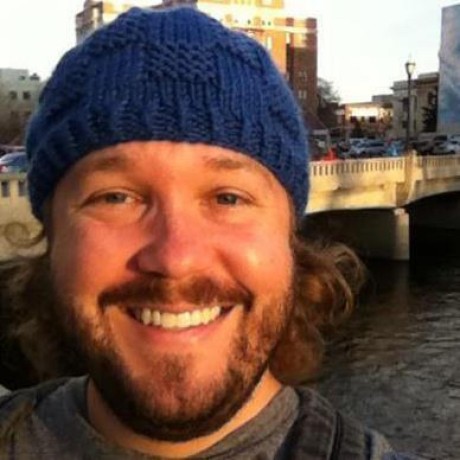
Tim and I hiked Flowery Peak on May 22 to stake a repeater on the crest above Virginia City. The node is on the air now. It fills in the east side of town and works alongside our repeaters on Davidson Peak and Ophir Hill to give the Comstock corridor close to full mesh coverage.
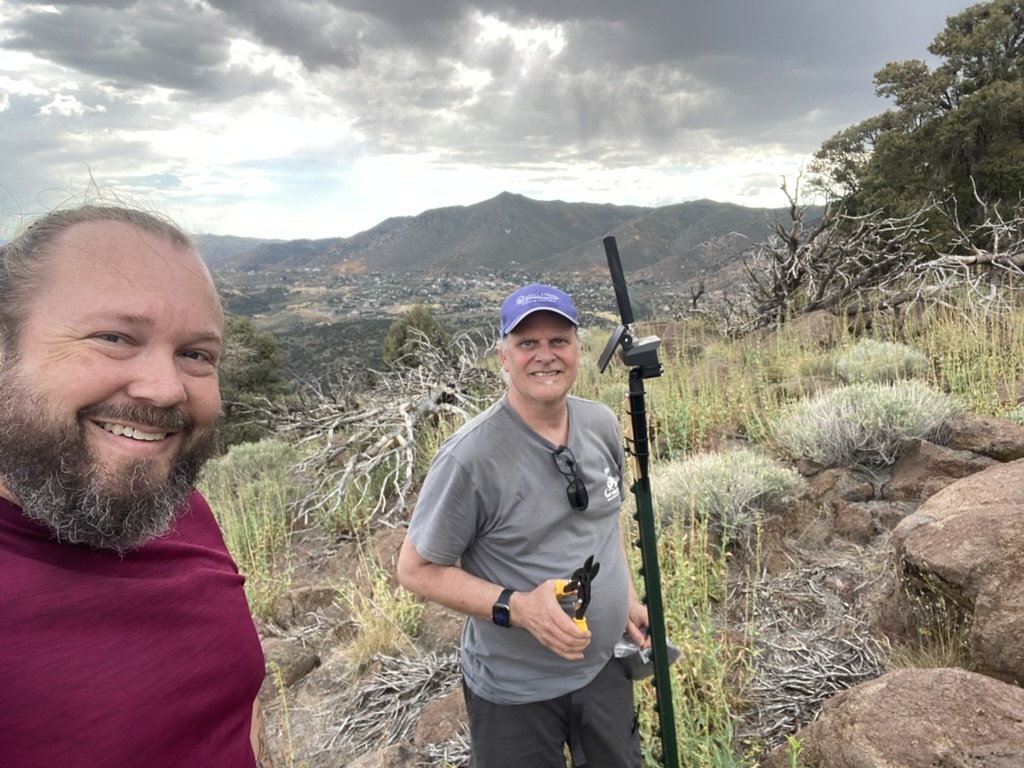
The hike up
Flowery Peak sits in the Virginia Range east of historic Virginia City at about 6,570 feet. There is no casual drive-up. Tim and I walked the last stretch on foot through brush, loose rock, and foxtail grass so thick it felt like we picked up ten thousand of them by the time we topped out.
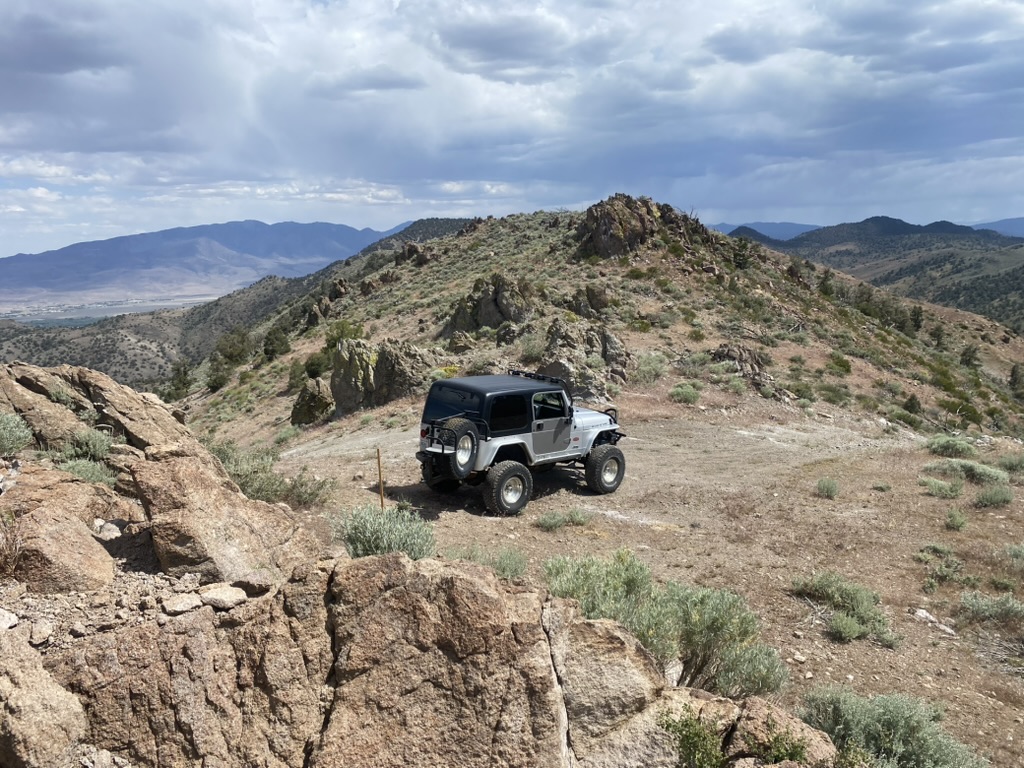
The terrain is honest about what it wants from you. Every step is earned. By the time we reached the summit we had a clear view of the basin and a clear sense of why this peak matters for radio.
Respect the summit
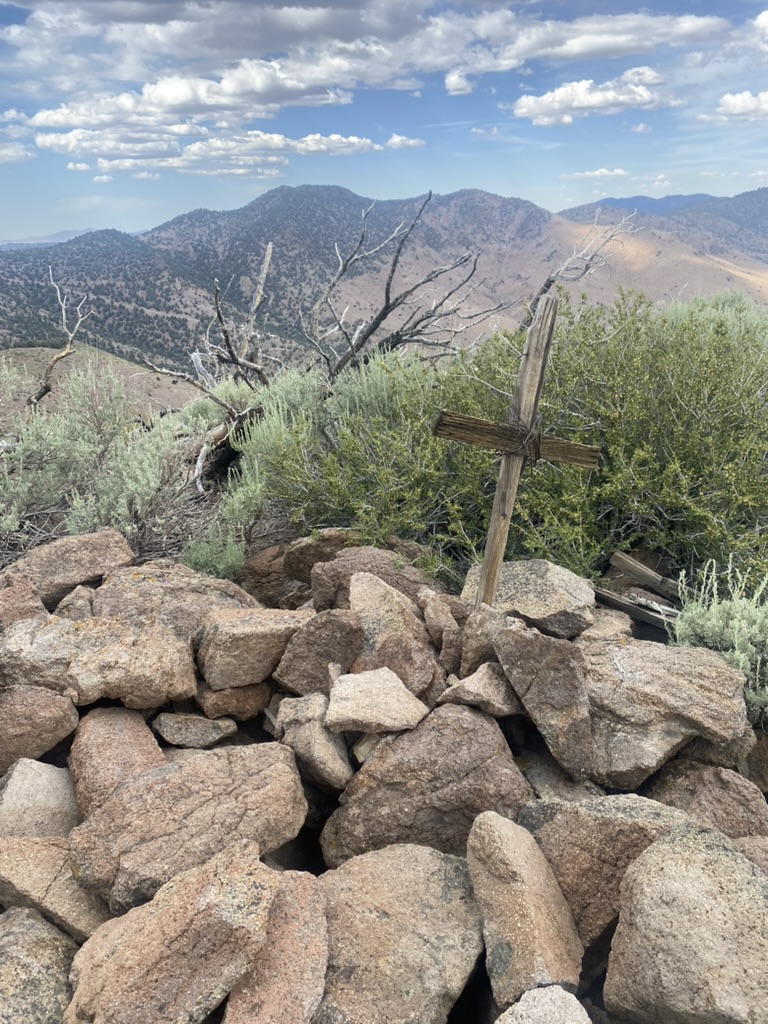
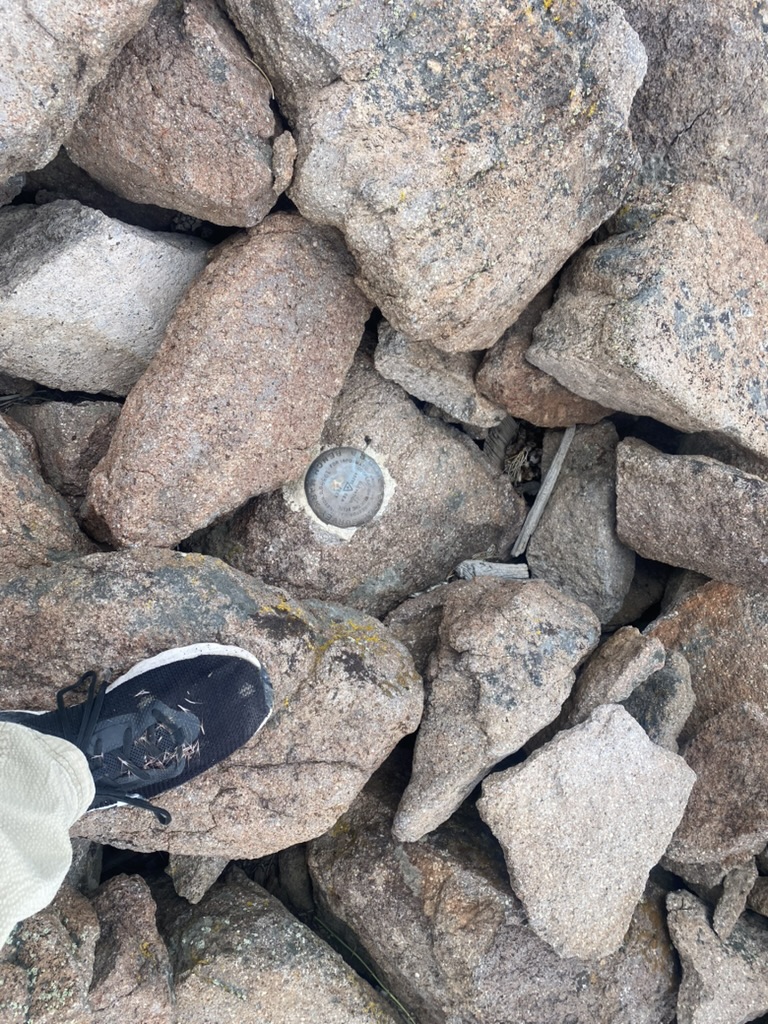
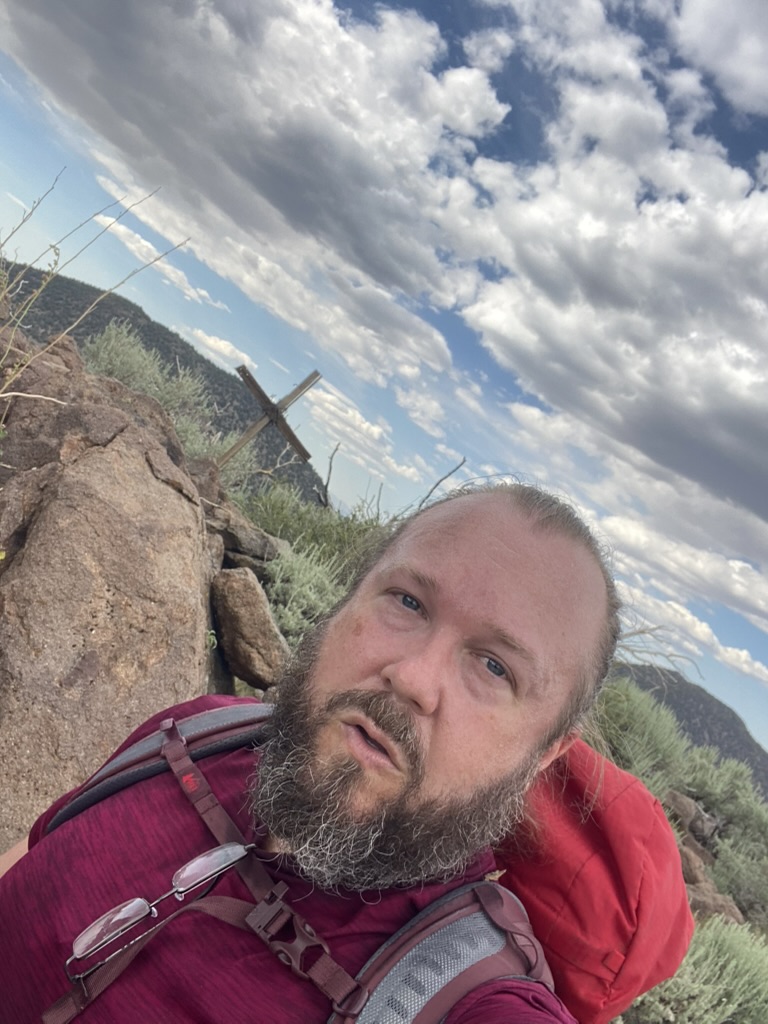
Flowery Peak is not an empty ridgeline. Near the high point we found a USGS benchmark disc set into the rock and what looked like a burial site marked with a wooden cross and a stone cairn. We gave both a wide berth. People came before us for reasons that have nothing to do with mesh networking, and the courteous thing is to leave those spots alone.
Finding the spot
Elevation alone does not pick your mount. We walked the crest with handheld radios and kept checking links back to Davidson, Ophir, and the other neighbors we expected to hear. A few steps in the wrong direction and the path dropped out. A few steps the other way and Virginia City lit up in the valley below.
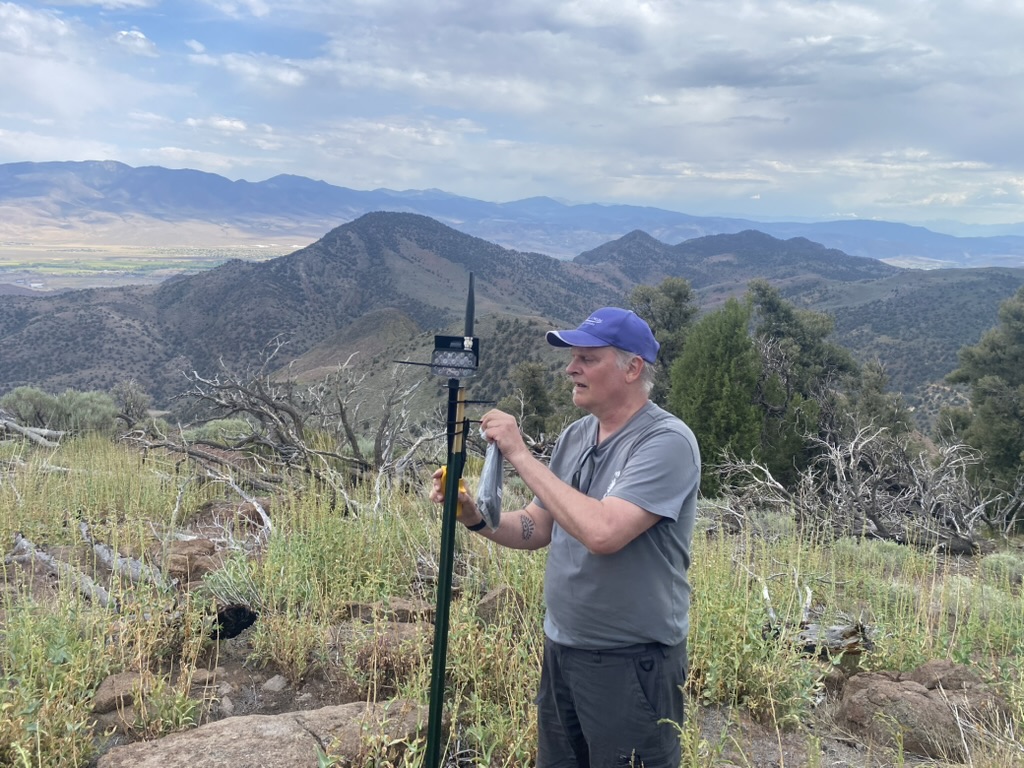
We settled on a spot with a clean view down into town and solid cooperation with the existing repeaters on the ridge. Tim drove a T-post into the rocky ground and we staked the node there. Same jank node philosophy we use everywhere: zip ties, a fence stake, and field data before we talk about permanent hardware.
Why this peak earns its keep
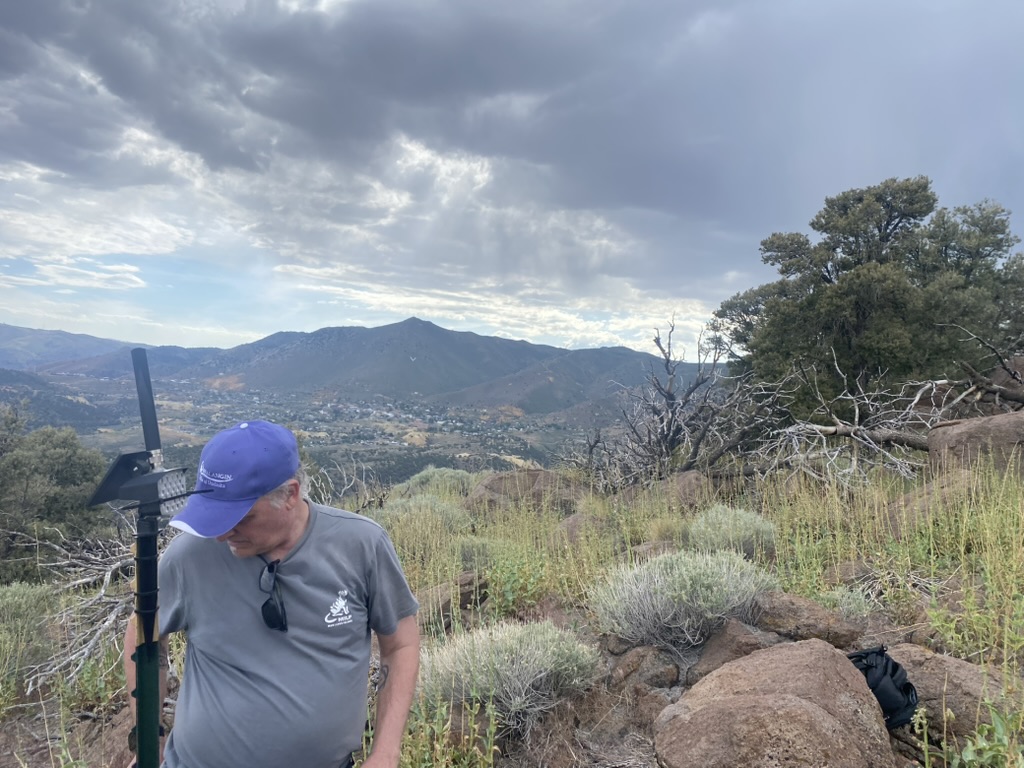
Virginia City sits in a bowl. Coverage from one direction rarely covers the whole town. Davidson Peak handles the high west side of the range. Ophir Hill anchors the south. Flowery closes the gap from the east and gives handheld radios downtown a much better shot at the mesh.
That three-node geometry is what turns a promising ridge into something closer to full coverage for a historic town that still depends on reliable comms when the cell network gets thin.
I meant to write this up when we came down the mountain. Life got in the way. The node did not wait. It has been serving the basin since May, and the field results match what we hoped for on the summit that day.
We do not have an approved 299 on any summit node yet, Flowery included. It is on the air under casual-use field testing while we work toward formal authorization with the BLM Carson Field Office. That paperwork is not done. It is getting close.